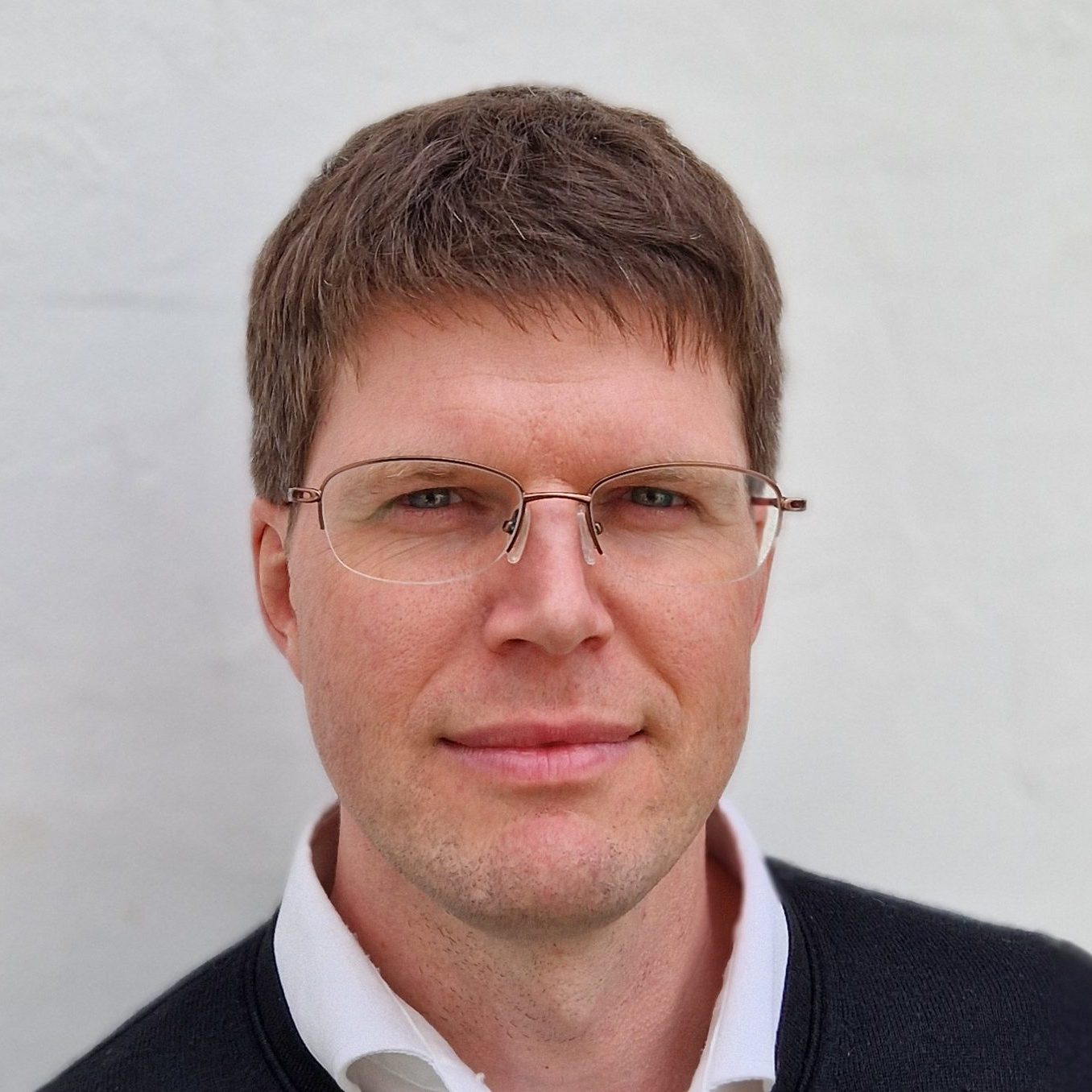

Über mich
Meine große Leidenschaft ist es Probleme und Fehler bzw. jegliches unerwünschte Verhalten zu identifizieren und zu analysieren. Diese Erkentnisse nutze ich im Anschluss um maßgeschneiderte Verbesserung und Optimierungen zu entwickeln. Im Laufe meiner Karriere habe ich diese Fähigkeiten bereits eingesetzt um die Lauftzeitverzögerungen sowie die Metastabilität von digitalen Schaltungen zu untersuchen, um analoge Hardware zu entwickeln sowie um detaillierte physikalische Simulationen durchzuführen. Im Privatleben verbessere ich meine Fähigkeiten indem ich alles was kaputt wird (und da gibt es immer was) versuche zu reparieren.
Ich bin hoch motiviert, zielorientiert, genau und erlaube es mir nicht Abkürzungen zu nehmen bevor ein Problem nicht komplett verstanden und gelöst ist. Ich bin ein Tastatur-Mensch, bevorzuge Linux als Betriebssystem und liebe es Aufgaben, die ich mehr als einmal mache, zu automatisieren. Ein kompletter Lebenslauf ist hier zum Download verfügbar, sowie meine komplette Publikationsliste.
Umweltschutz is ein sehr wichtig Thema für mich. Daher suche ich ständig nach Wegen die Leistungsaufnahme sowie Abfall woimmer möglich zu minimieren. Meine Freizeit verbringe ich mit Reparaturen aller Art, Holzarbeiten sowie als aktives Mitglied unserer lokalen freiwilligen Feuerwehr.
Interessen
- Problemidentifizierung
- Analyse & Reparatur
- Optimierung und Effizienzsteigerung
Ausbildung
- Doktorat in technischer Informatik, TU Wien, 2022
- Master in Mikroelektronik, TU Wien, 2016
- Master in technischer Informatik, TU Wien, 2014
Kürzliche Aktivitäten
Besondere Publikationen
Burin, Jürgen; Gaggl, Philipp; Waid, Simon; Gsponer, Andreas; Bergauer, Thomas
TCAD Parameters for 4H-SiC: A Review Miscellaneous ForthcomingOpen Access
Forthcoming.
BibTeX |
@misc{burin2024tcadparameters4hsicreview,

title = {TCAD Parameters for 4H-SiC: A Review},

author = {Jürgen Burin and Philipp Gaggl and Simon Waid and Andreas Gsponer and Thomas Bergauer},

url = {http://burin.at/wp-content/uploads/2025/12/4H-SiC_Review.pdf

https://arxiv.org/abs/2410.06798},

doi = {10.48550/arXiv.2410.06798},

year  = {2025},

date = {2025-07-01},

urldate = {2025-07-01},

booktitle = {TCAD Parameters for 4H-SiC: A Review},

keywords = {featured, OpenAccess},

pubstate = {forthcoming},

tppubtype = {misc}

}
Maier, Jürgen; Steininger, Andreas; Najvirt, Robert
The Hidden Behavior of a D-Latch Journal Article Open Access
In: IEEE Transactions on Circuits and Systems I: Regular Papers, vol. 70, no. 4, pp. 1660-1670, 2023.
@article{MSN23:TCASI,

title = {The Hidden Behavior of a D-Latch},

author = {Jürgen Maier and Andreas Steininger and Robert Najvirt},

url = {http://burin.at/wp-content/uploads/2024/03/MSN23_TCASI.pdf},

doi = {10.1109/TCSI.2023.3237283},

year  = {2023},

date = {2023-01-01},

urldate = {2023-01-01},

journal = {IEEE Transactions on Circuits and Systems I: Regular Papers},

volume = {70},

number = {4},

pages = {1660-1670},

abstract = {For clock and data transitions in close temporal proximity, synchronous memory elements potentially enter metastability, which leads to unintended output behavior. Although respective analyses in literature have already derived suitable explanations, almost all of them modeled the control (clock) signal transition with negligible rise/fall time. In modern circuits this assumption is, however, not reasonable any more. In fact, due to a finite slope, intermediate clock signal values have to be considered during a large share of the storage process, while their concrete impact is not yet sufficiently explored. In this paper we thus use static and dynamic considerations to thoroughly investigate the behavior of a latch for arbitrary analog control, data and output values, i.e., during the storage process. Basic circuit considerations allow us to derive a unified model which identifies the latch as a Schmitt Trigger with vastly varying hysteresis. We verify the correctness of our predictions by comparison to analog SPICE simulations. Finally we are able to generalize our findings and thus provide explanations for yet unexplained behavior reported in literature.},

key = {2023},

keywords = {featured, OpenAccess},

pubstate = {published},

tppubtype = {article}

}
Maier, Jürgen
Proper Abstractions for Digital Electronic Circuits: A Physically Guided Approach PhD Thesis Open Access
TU Wien, Vienna, Austria, 2022.
@phdthesis{M22:PHD,

title = {Proper Abstractions for Digital Electronic Circuits: A Physically Guided Approach},

author = {Jürgen Maier},

url = {http://burin.at/wp-content/uploads/2024/03/Diss_Maier_Juergen.pdf},

doi = {10.34726/hss.2022.102506},

year  = {2022},

date = {2022-01-01},

urldate = {2022-01-01},

school = {TU Wien, Vienna, Austria},

abstract = {Over the last decades, major improvements in handling semiconductor materials led

to a massive shrinkage of transistor sizes that, in turn, enabled engineers to realize

larger and faster digital circuits. The resulting increase in complexity had, however,

negative effects on verification: Although nowadays highly accurate models of the main

physical processes, which govern the behavior of a circuit, are available, the size and

complexity of these models makes it impossible to finish simulations/computations in

reasonable time. One possible solution is to introduce abstractions, which have the

goal to reduce the verification effort by hiding certain details while preserving accuracy.

Naturally, developing proper abstractions is a very challenging task: Too little or the

wrong information provide an incomplete picture while excessive models tend to be slow.


In this thesis, we, thus, study proper abstractions for digital electronic circuits. In

our opinion, the best results are achieved by (i) understanding the underlying physical

behaviors and (ii) picking appropriate abstract models and parameters based on the

gained insights. This effectively reduces the task to observation and conclusion, so no

assumptions or even guessing is required. Whereas the abstractions and models presented

in this thesis are not meant to replace existing approaches, they provide an alternative

in between highly sophisticated methods (e.g., ordinary differential equations in analog

simulations) and overly simplified ones (e.g., digital models utilizing pure and inertial

delays). Overall, we aim at achieving reliable models, which provide high coverage and

accuracy at low verification efforts compared to existing approaches.


To achieve this goal, we thoroughly studied the following model domains:


1) Analog abstractions: To describe the analog behavior of various logic gates in a

simplified fashion, we develop new models based on physically inspired basic transistor

equations. Although these provide reasonably accurate results, the required effort is

still too high for large-scale verification. Consequently, we employ further abstractions.

Using analytic calculations and fittings, we aim at mathematical functions that allow an

approximation of the analog waveforms. We show that unique rising and falling full-range

switching waveforms provide a very good basis, since their proper combination (more

specifically, the addition of time-shifted versions) is able to closely approximate every

observed shape. We are convinced that our approach will enable the development of an

analog simulation suite with high accuracy, which only needs a fraction of the verification

time required for established analog simulation methods.


2) Digital abstractions: We thoroughly analyze and extend the Involution Delay

Model, the only candidate for a faithful delay estimation method known so far. Based

on physically guided considerations, we (i) identify several shortcomings, (ii) provide a

proper explanation and (iii) develop improvements that remove the observed problems.

More specifically, we show how to calculate delay functions analytically, relax certain

restrictions that impaired easy applicability, and even introduce non-determinism to

improve the model coverage. Formal proofs and deductions are used to show the

correctness of our new abstractions. Simulations of simple circuits allow, for the first

time, a quantitative evaluation of the superior accuracy and the not insignificant, but

quite reasonable, overhead. This enables a fair comparison of the Involution Delay Model

and state-of-the-art digital delay models.


3) We complement our efforts on analog and digital abstractions by an in-depth

investigation of the Schmitt Trigger, in particular, its susceptibility to metastability

(intermediary output values, late transitions). By introducing and using various novel

methods, we are able to characterize the metastable behavior of this gate, i.e., when to

expect which effects. Exploiting this knowledge, we show, based on analog simulations,

how to generate an arbitrary output waveform in a common implementation by controlling

the input accordingly. We also argue that cascading Schmitt Triggers, as it is done with

Flip-Flops in a synchronizer, only improves the situation partially, as new undesired

effects are added. Overall, our results, however, show that a very fine-grained control of

the input is demanded to exploit metastable behavior in the Schmitt Trigger, making it

very unlikely in normal operation.


From the answers we obtained by investigating these interesting research questions,

we can conclude that there is no “silver bullet” w.r.t. modeling abstractions. Every

approach is unique in some respect and thus requires a careful analysis of the governing

physical behavior to achieve the optimal performance, accuracy and coverage.},

key = {2022},

keywords = {featured, OpenAccess},

pubstate = {published},

tppubtype = {phdthesis}

}
to a massive shrinkage of transistor sizes that, in turn, enabled engineers to realize
larger and faster digital circuits. The resulting increase in complexity had, however,
negative effects on verification: Although nowadays highly accurate models of the main
physical processes, which govern the behavior of a circuit, are available, the size and
complexity of these models makes it impossible to finish simulations/computations in
reasonable time. One possible solution is to introduce abstractions, which have the
goal to reduce the verification effort by hiding certain details while preserving accuracy.
Naturally, developing proper abstractions is a very challenging task: Too little or the
wrong information provide an incomplete picture while excessive models tend to be slow.
In this thesis, we, thus, study proper abstractions for digital electronic circuits. In
our opinion, the best results are achieved by (i) understanding the underlying physical
behaviors and (ii) picking appropriate abstract models and parameters based on the
gained insights. This effectively reduces the task to observation and conclusion, so no
assumptions or even guessing is required. Whereas the abstractions and models presented
in this thesis are not meant to replace existing approaches, they provide an alternative
in between highly sophisticated methods (e.g., ordinary differential equations in analog
simulations) and overly simplified ones (e.g., digital models utilizing pure and inertial
delays). Overall, we aim at achieving reliable models, which provide high coverage and
accuracy at low verification efforts compared to existing approaches.
To achieve this goal, we thoroughly studied the following model domains:
1) Analog abstractions: To describe the analog behavior of various logic gates in a
simplified fashion, we develop new models based on physically inspired basic transistor
equations. Although these provide reasonably accurate results, the required effort is
still too high for large-scale verification. Consequently, we employ further abstractions.
Using analytic calculations and fittings, we aim at mathematical functions that allow an
approximation of the analog waveforms. We show that unique rising and falling full-range
switching waveforms provide a very good basis, since their proper combination (more
specifically, the addition of time-shifted versions) is able to closely approximate every
observed shape. We are convinced that our approach will enable the development of an
analog simulation suite with high accuracy, which only needs a fraction of the verification
time required for established analog simulation methods.
2) Digital abstractions: We thoroughly analyze and extend the Involution Delay
Model, the only candidate for a faithful delay estimation method known so far. Based
on physically guided considerations, we (i) identify several shortcomings, (ii) provide a
proper explanation and (iii) develop improvements that remove the observed problems.
More specifically, we show how to calculate delay functions analytically, relax certain
restrictions that impaired easy applicability, and even introduce non-determinism to
improve the model coverage. Formal proofs and deductions are used to show the
correctness of our new abstractions. Simulations of simple circuits allow, for the first
time, a quantitative evaluation of the superior accuracy and the not insignificant, but
quite reasonable, overhead. This enables a fair comparison of the Involution Delay Model
and state-of-the-art digital delay models.
3) We complement our efforts on analog and digital abstractions by an in-depth
investigation of the Schmitt Trigger, in particular, its susceptibility to metastability
(intermediary output values, late transitions). By introducing and using various novel
methods, we are able to characterize the metastable behavior of this gate, i.e., when to
expect which effects. Exploiting this knowledge, we show, based on analog simulations,
how to generate an arbitrary output waveform in a common implementation by controlling
the input accordingly. We also argue that cascading Schmitt Triggers, as it is done with
Flip-Flops in a synchronizer, only improves the situation partially, as new undesired
effects are added. Overall, our results, however, show that a very fine-grained control of
the input is demanded to exploit metastable behavior in the Schmitt Trigger, making it
very unlikely in normal operation.
From the answers we obtained by investigating these interesting research questions,
we can conclude that there is no “silver bullet” w.r.t. modeling abstractions. Every
approach is unique in some respect and thus requires a careful analysis of the governing
physical behavior to achieve the optimal performance, accuracy and coverage.